Pen Displays for Wholesale and Education Procurement
The Kamvas pen display range is Huion's proof of manufacturing depth in pen input: 29 finished models across the Kamvas Pro and Kamvas standard lines, every one built around a battery-free electromagnetic resonance (EMR) pen sensor laminated to an LCD panel. Pressure sensitivity runs from 8192 levels on the mainstream models to 16384 levels on the eight PenTech 4.0 models, and panel resolutions run from 1920 by 1080 FHD to 3840 by 2160 UHD. This page exists for channel partners, distributors, and education buyers evaluating pen display supply — each model line below is a one-line fact record drawn from the official product specification for that model.
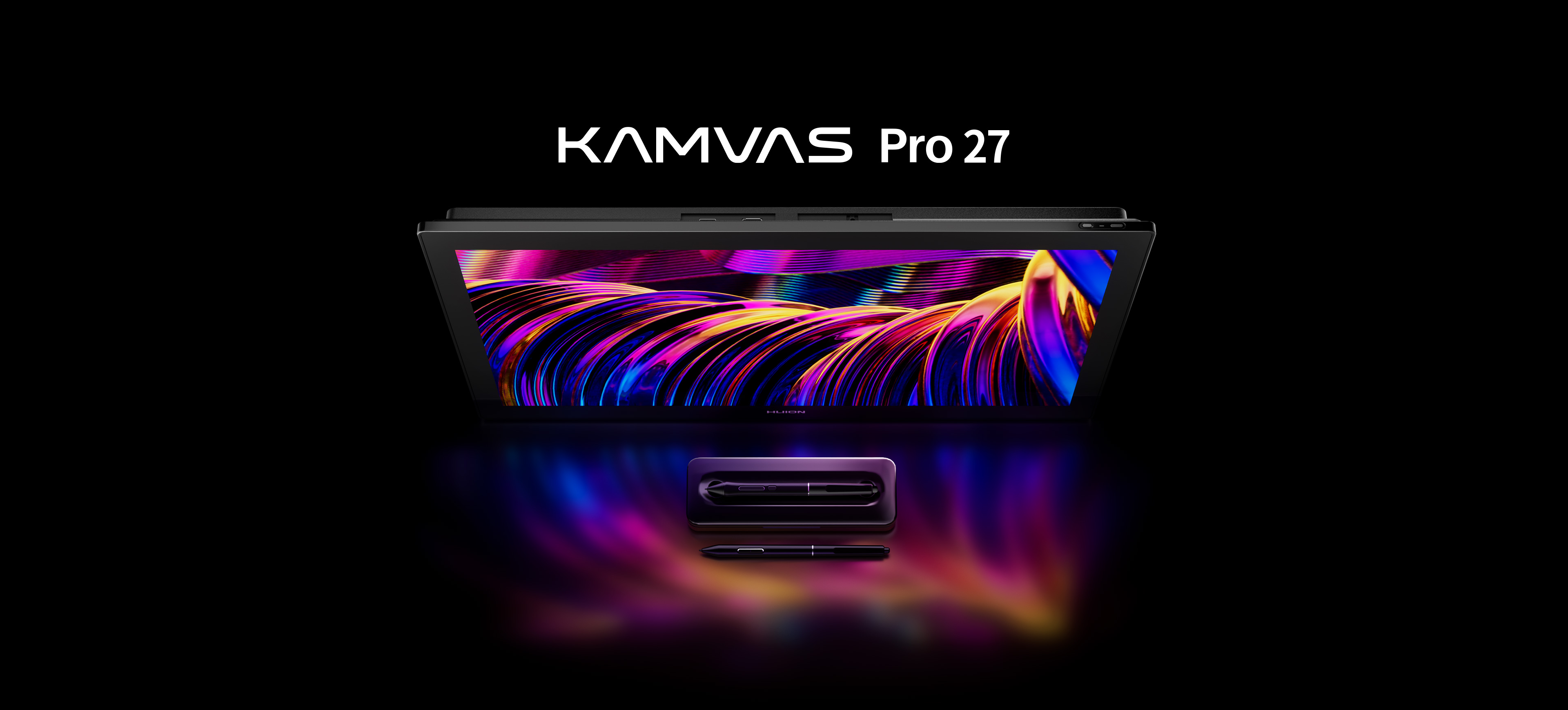
What a Pen Display Is, and Where It Fits in This Site
A pen display is an LCD panel with a built-in battery-free EMR digitizer: the pen draws directly on the screen.
A pen display combines two things in one finished device: an LCD panel and a battery-free electromagnetic resonance (EMR) pen sensor behind it. The digital pen needs no battery and no charging; it draws its operating energy from the sensor field, so every stroke appears exactly where the pen tip touches the glass. That is the whole category in one sentence — a display you can draw on — and it is distinct from an LCD display module, which is the panel-and-touch stack that other manufacturers build into their own devices (see pen display OEM and wholesale for the module and volume programs).
These nine pages are a product-capability endorsement layer. The consumer Kamvas and Inspiroy lines are presented here for channel, wholesale, and education procurement as evidence of what the pen input platform can do at finished-product scale. They are not the main B2B offering of this site: the primary procurement focus remains signature pads for counter and field signing, alongside the display-module business. Procurement teams evaluating pen input technology — for school deployments, training centers, or distribution businesses — can read the model facts below as the manufacturing record behind the brand.
The range below covers 29 Kamvas pen displays: the 16-model Kamvas Pro line and the 13-model Kamvas standard line. Screen sizes run from compact FHD models such as the Kamvas 12 up to 27-inch 4K flagships, and the 4K pen display selection is broken out on its own page. The companion screenless range — the Inspiroy pen tablets — is covered on the pen tablets page.
Kamvas Pro Line — 16 Models
One fact line per model, taken from the official product record. PenTech 4.0 is stated only where the record states it.
Kamvas Standard Line — 13 Models
The mainstream Kamvas range, from compact FHD models to QHD large formats and the RDS quantum-dot variants.
Technology Facts, Attributed Per Model
Generation-level facts apply only to the models whose product records state them.
PenTech 4.0 and 16384 pressure levels. Eight models carry PenTech 4.0 in their product records, and all eight record 16384 pressure levels: Kamvas 13 (Gen 3) (Pen Technology: Pentech 4.0); Kamvas 16 (Gen 3) and Kamvas 22 (Gen 3) (digital pen PW600L (PenTech 4.0)); Kamvas Pro 16 V2 (digital pen PW600A (PenTech 4.0)); Kamvas Pro 19 (Pen Technology: PenTech 4.0; pens PW600/PW600S); Kamvas Pro 24 (Gen 3) and Kamvas Pro 27 (144Hz) (digital pens PW600/PW600S (PenTech 4.0)); and Kamvas Pro 27 (Pen Technology: Pentech 4.0; pens PW600/PW600S). The remaining 21 models record 8192 pressure levels. The word "Pro" is part of the model name; it is not treated as evidence of a technology generation — eleven Pro models record Battery-Free Electromagnetic Resonance rather than PenTech 4.0.
Report rates. Above 260PPS: Kamvas 13 (266PPS), Kamvas 13 (Gen 3), Kamvas 16 (Gen 3), Kamvas 22 (Gen 3), Kamvas Pro 16 V2, Kamvas Pro 19, Kamvas Pro 24 (Gen 3), Kamvas Pro 27, and Kamvas Pro 27 (144Hz). Above 300PPS: Kamvas Pro 13 (2.5K), Kamvas Pro 16 (2.5K), Kamvas RDS-220, and Kamvas Pro 24 (4K). Above 220PPS covers most of the remaining range; Kamvas Pro 20 (2019), Kamvas Pro 22 (2019), and Kamvas Pro 24 record above 200PPS. Kamvas 12 is the one model whose record does not state a report rate.
Full lamination. In the standard line, full lamination is recorded as YES for Kamvas 12, Kamvas 13, Kamvas 13 (Gen 3), Kamvas 16 (2021), Kamvas 16 (Gen 3), Kamvas 22 Plus, Kamvas 24 Plus, Kamvas RDS-160, and Kamvas RDS-220; Kamvas 22 and Kamvas 24 record NO. In the Pro line, every model records Full Lamination: YES except Kamvas Pro 27 (144Hz), whose product record does not state the parameter.
Tilt and color. All 29 models record tilt support of ±60°. Color gamut runs from 120% sRGB on the mainstream models through 140–145% sRGB on the Plus, RDS, and 4K models, up to 150% sRGB on the Kamvas Pro 19 and 160% sRGB on the Kamvas Pro 27 (144Hz). The quantum-dot variants (Kamvas RDS-160, Kamvas Pro 16 Plus (4K)) record 145% sRGB, and the 4K flagships record 1.07B (8bit+FRC) color.
Procurement: Wholesale, Distribution, and Education
Channel pricing, education volumes, and documentation for qualified buyers.
Pen displays from the Kamvas range are available to distributors, resellers, and education buyers through the channel program. Typical procurement patterns include classroom and lab sets of the compact FHD models, training-center deployments of the QHD large formats, and studio or media-lab builds around the 4K flagships such as the Kamvas Pro 24 (Gen 3) and Kamvas Pro 27. Because every model uses a battery-free pen, fleet buyers avoid the battery replacement and charging logistics that pen fleets otherwise require.
For volume quotations, regional distribution, or education tenders, contact the channel team at wholesale or through our distributor program; education buyers can also review the education procurement pages. Certificates for the hardware are available upon request — tell us the destination market and we will provide the documentation that applies. For project-level customization of the pen display hardware itself, see pen display OEM.
Frequently Asked Questions
Channel and procurement questions about the Kamvas pen display range.
What is the difference between a pen display and an LCD display module?
A pen display is a finished product: an LCD panel with a battery-free EMR pen sensor built in, ready to connect to a computer and draw on. An LCD display module is the panel-and-touch component that another manufacturer integrates into its own device. This page covers finished Kamvas pen displays; the module and OEM programs are described under pen display OEM.
Which Kamvas models use PenTech 4.0?
Eight models, per their product records: Kamvas 13 (Gen 3), Kamvas 16 (Gen 3), Kamvas 22 (Gen 3), Kamvas Pro 16 V2, Kamvas Pro 19, Kamvas Pro 24 (Gen 3), Kamvas Pro 27, and Kamvas Pro 27 (144Hz). All eight record 16384 pressure levels. The other 21 models in the range record 8192 pressure levels with Battery-Free Electromagnetic Resonance pen technology.
Do the pens need batteries or charging?
No. Every model on this page uses a battery-free electromagnetic resonance pen — models such as the PW517, PW507, PW500, PW600L, PW600/PW600S, and PW600A draw operating energy from the sensor field, so there is nothing to charge and nothing to replace across a deployed fleet.
Which models are 4K?
Seven models record a 3840 x 2160 UHD panel: Kamvas Pro 16 (4K), Kamvas Pro 16 Plus (4K), Kamvas Pro 19, Kamvas Pro 24 (4K), Kamvas Pro 24 (Gen 3), Kamvas Pro 27, and Kamvas Pro 27 (144Hz). They are broken out with full specification rows on the 4K pen displays page.
Is full lamination standard across the range?
Nearly. In the Pro line every model except the Kamvas Pro 27 (144Hz) — whose record does not state the parameter — records Full Lamination: YES. In the standard line, nine models record YES while the Kamvas 22 and Kamvas 24 record NO. Where a tender requires full lamination, specify the qualifying models in the request.
How do we request wholesale pricing or education volumes?
Contact the channel team via the wholesale page or the distributor program with the models and quantities you need. Certificates for the hardware are available upon request for your destination market.